
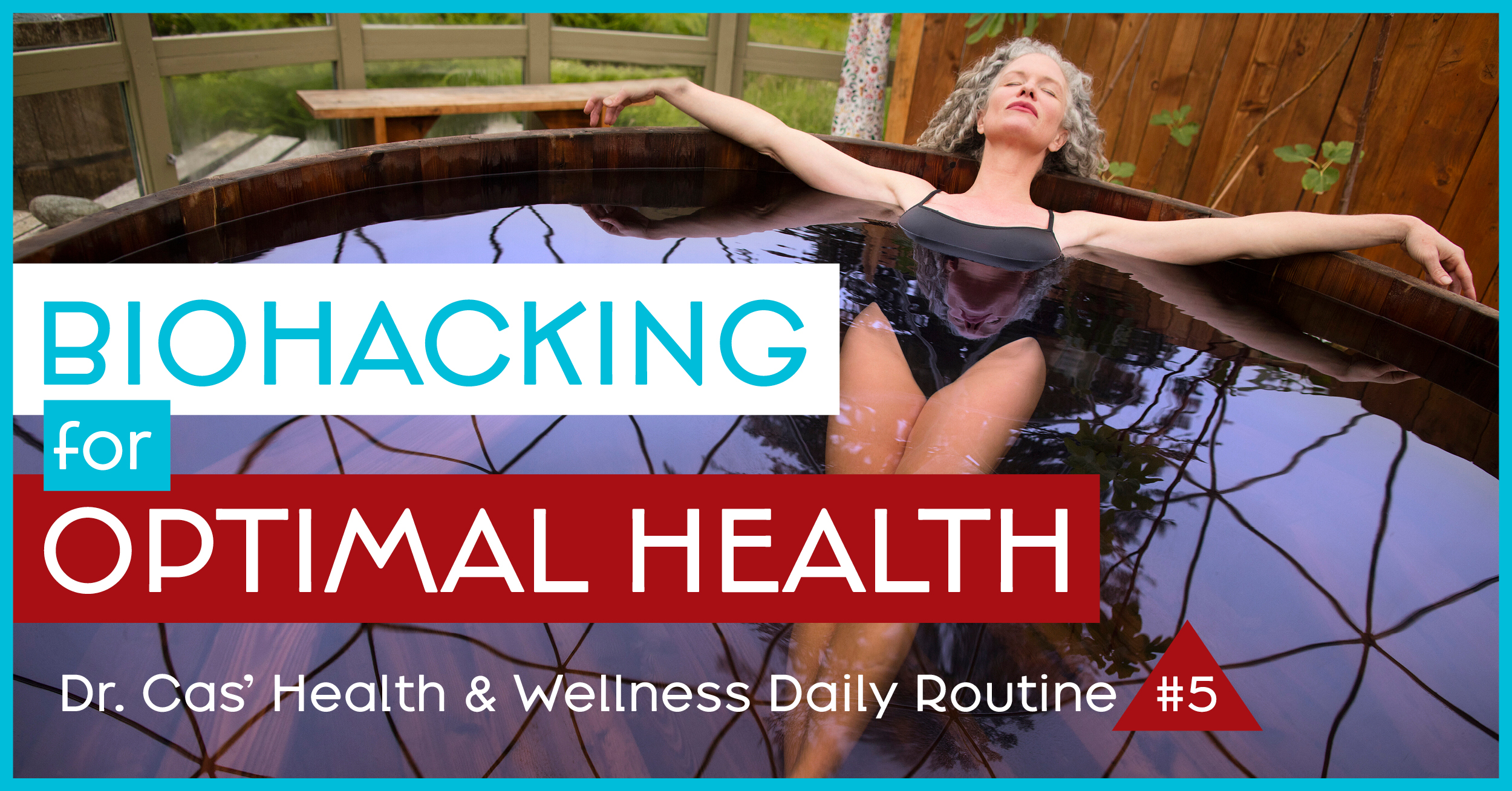
Biohacking gets a lot of attention, and for good reason. Tools like sauna, cold plunge, breathwork, PEMF therapy and fasting can support recovery, resilience and longevity when used correctly.
That’s why biohacking and optimization is the fifth core practice in Dr. Cas’ Daily Routine for Health & Wellness:
- Consciousness and Intentional Living
- Movement and Exercise
- Sleep and Recovery
- Nutrition and Hydration
- Biohacking and Optimization
Each practice supports the others, and biohacking works best when sleep, nutrition, movement and stress regulation are already in place.
What is Biohacking?
Biohacking is the intentional use of tools, routines and environmental inputs to support better health, performance, recovery and longevity. Some biohacking practices are simple and easily accessible, like breathwork or morning light. Others are more advanced, like cold plunge, PEMF therapy, contrast therapy or extended fasting.
The goal is not to do everything. The goal is to choose the right tools for your body, your goals and your current foundation.
Sauna
Sauna use creates a controlled heat stress that your body adapts to over time. Used consistently and safely, heat exposure can support cardiovascular conditioning, circulation, relaxation, mood, recovery and stress resilience.
In the guide, I share simple starting recommendations, including beginning with shorter sessions and building gradually as tolerated. Hydration is essential before and after sauna use, especially if you are sweating heavily or combining sauna with exercise or cold exposure. As with any protocol, safety matters and the guide covers that, too.
Cold Plunge
Cold water immersion is a short, intense stimulus that trains stress tolerance. It can support mood, focus, motivation, nervous system resilience, inflammation balance, recovery and metabolic flexibility.
But cold plunge is also a strong stressor, so it should be approached with respect. Cold exposure is not about proving how tough you are. It is about teaching your nervous system to stay regulated under stress.
And safety is non-negotiable: never do cold plunges alone, never hyperventilate in the water and avoid cold immersion if you have certain conditions.
Contrast Therapy
Contrast therapy alternates heat and cold exposure to create a strong circulation and recovery stimulus. This can support recovery, inflammation balance, post-workout restoration, energy and nervous system training. Many people use contrast therapy by alternating sauna and cold plunge, followed by a recovery period with hydration and electrolytes.
But again, this is an advanced layer. If either heat or cold feels too intense, reduce the time, adjust the temperature or use one tool at a time. You do not need to force contrast therapy to benefit from biohacking. Your body should adapt, not be overwhelmed.
PEMF Therapy
PEMF stands for pulsed electromagnetic field therapy. A PEMF mat uses low-frequency pulses to support relaxation, circulation and recovery.
Many people use PEMF in the evening as part of a wind-down routine. It can pair well with reading, breathwork or other calming practices before bed.
In the guide, I talk about using PEMF for short sessions, starting with lower intensity and building gradually.
PEMF is generally well tolerated, but it is not appropriate for everyone. Avoid PEMF if you have a pacemaker, insulin pump, epilepsy or are pregnant unless cleared by your physician.
Breathwork
Breathwork is one of the fastest and most accessible ways to shift your nervous system. It can support stress resilience, focus, emotional regulation and recovery. It also pairs well with the rest of this routine because your breath is always available to you.
In the guide, I share two different approaches:
- Wim Hof-style breathwork can be energizing and mentally clarifying, which is why many people prefer it in the morning.
- Alternate nostril breathing is slower and more calming, making it a great option in the evening or anytime you feel anxious, overstimulated or mentally scattered.
Always practice breathwork safely. Do it sitting or lying down, never in water, while driving or in any situation where lightheadedness could be dangerous.
Extended Fasting
Extended fasting is a longer fasting window, typically 72–86 hours, that may support deeper metabolic shifts, insulin sensitivity, inflammation balance and cellular cleanup processes such as autophagy.
But this is an advanced protocol. I generally recommend extended fasting no more than once per quarter, and only for the right person. It is not appropriate for everyone, especially people who are pregnant, underweight, have a history of disordered eating, have diabetes or blood sugar regulation issues, have cardiovascular disease or take medications that require food.
Start Slow and Simple
One of the biggest mistakes people make with biohacking is trying to do everything at once. They add sauna, cold plunge, fasting, supplements, breathwork, wearables and sleep tracking all in the same week — then wonder why they feel stressed instead of optimized. Start with one tool.
Also remember that biohacking is most powerful when it supports the basics. It should enhance your routine, not replace it. You still need sleep, real food, hydration, movement and nervous system regulation. Once those pieces are in place, biohacking can help you go deeper.
Ready to Optimize?
Download Dr. Cas’ Daily Routine for Health & Wellness to learn more about all five core practices and explore the biohacking tools, instructions and safety considerations included in the guide.
And if you want help deciding which tools make sense for your body, goals and health history, visit drcasmd.com to explore options to work with me and my trusted team.